Public corruption is the crisis behind every crisis. We're the generation ending that.
We believe in the power of collective action to create meaningful change.
500+
Leaders in this mission
15+
Affiliated organizations
15
Countries and growing
While the world addresses symptoms, we target the root cause.
Public corruption costs developing countries $1.26 trillion every year (World Economic Forum), not as an abstraction, but as resources that never reach those they are meant to serve. It is the single most consistent barrier to progress on the SDGs and the least treated as a priority, and young people pay the highest price, inheriting systems that limit their access to opportunity and institutions that work. YAC Foundation is the first youth-led international organization built around that premise, bringing together young leaders from across the globe to generate the evidence the world needs to urge leaders and institutions to act.
- ✓We measure it.
- ✓We document it.
- ✓We empower youth.
- ✓We connect evidence to the institutions that have the power to act.
Who leads us
Board of Directors and Advisors
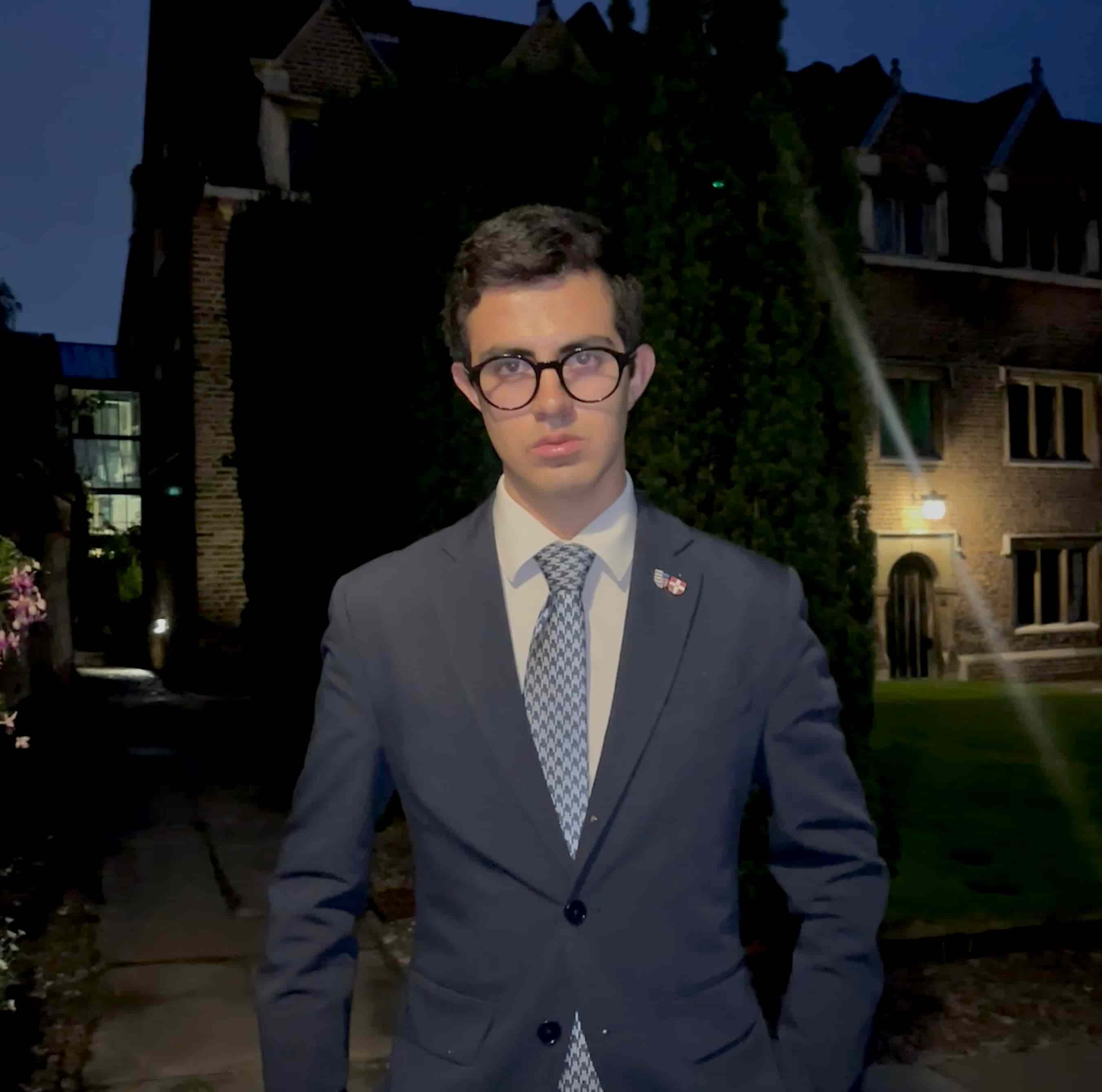
Nicolas C
Founder & Executive Director
Ecuador
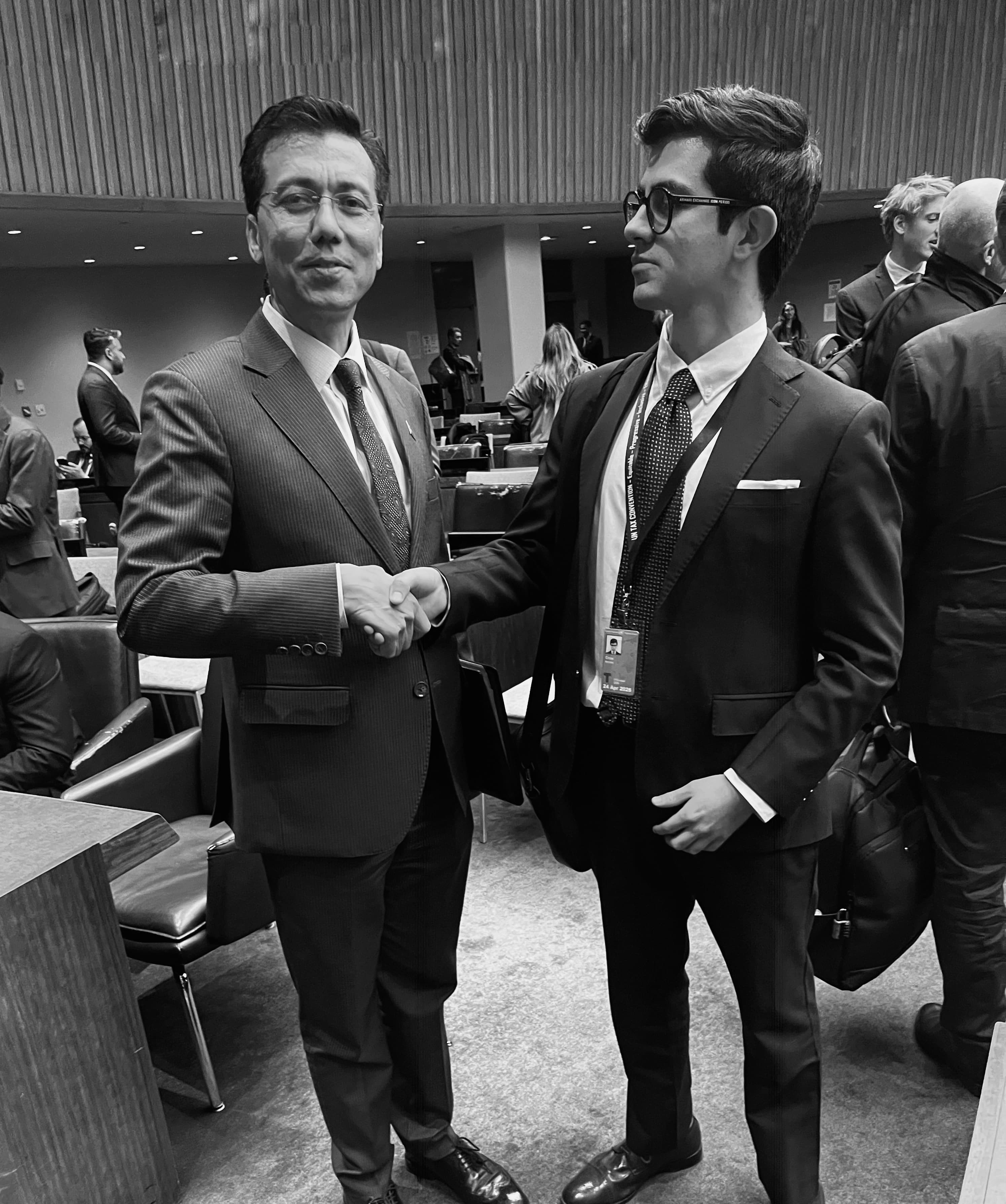
Nicolas Crow is the Founder of YAC Foundation, a youth-led international organization active across 15 countries focused on governance, transparency, and combating public corruption to advance sustainable development. He oversees the organization's relations with governments, international organizations, and Gen Z movements worldwide, while leading its international expansion and strategic development. He has represented YAC Foundation in high-level international forums and has served as an advisor on different boards.
Alongside his work at YAC Foundation, Nicolas works at the intersection of law, business, and government, advising on political and legal strategy, public affairs, regulatory affairs, and international cooperation across the public and private sectors. His legal background includes public international law, with a focus on emerging markets development, AI regulation, and the institutional frameworks that support sustainable and responsible growth.
He holds a law degree from Universidad San Francisco de Quito and has pursued academic studies at the University of Cambridge, Peking University, and Beijing International Studies University. He speaks three languages and has engaged with governments, multilateral institutions, and civil society organizations across multiple regions. He believes integrity should remain at the center of every Sustainable Development Goal as an essential pillar, and that empowering young people to engage seriously with governance and public institutions is one of the most consequential investments the international community can make. His work is particularly aligned with SDG 16 on Peace, Justice, and Strong Institutions, especially targets 16.5 and 16.6 focused on reducing corruption and building effective, accountable, and transparent institutions.
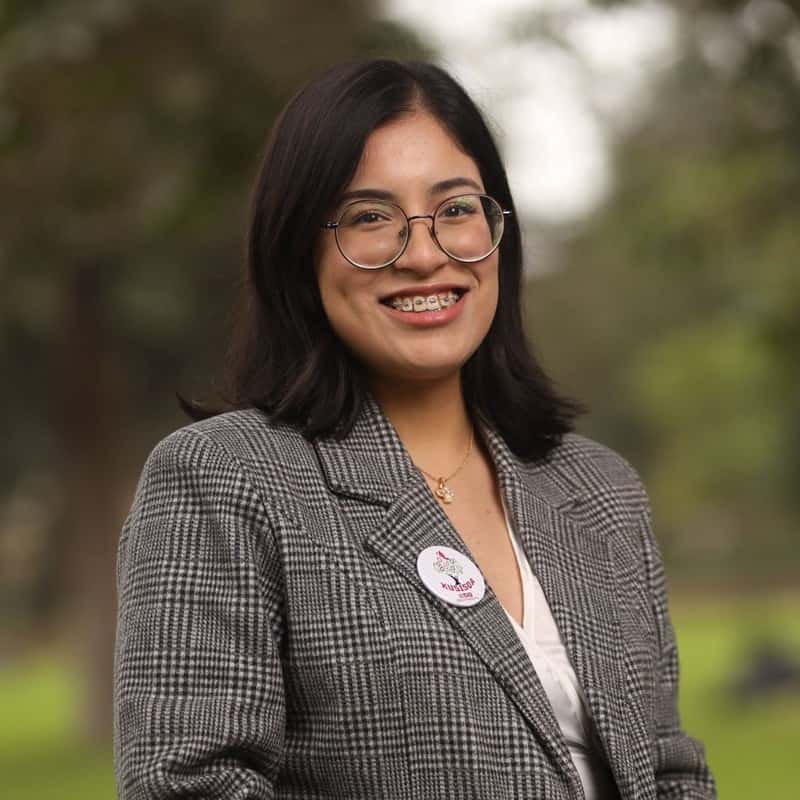
Leslie Collao Bazan
Director of Internal Affairs
Peru
Leslie Collao Bazan is the Founder of Kusisqa and served as Peru's Youth Delegate to the United Nations for the 2024-2025 term, representing the voices of young people in international decision-making spaces and multilateral dialogues.
Her work focuses on advancing youth leadership, gender equality, and climate justice across Peru and Latin America, promoting greater youth participation as a driver of social transformation. She is currently pursuing studies in Business Administration and was recognized as part of Forbes 30 Under 30 Peru for her contributions to youth advocacy and social impact initiatives. Her work is closely aligned with SDG 5 on Gender Equality.

Francesca Howard
Senior Advisor on U.S. Affairs and Gender Equality
United States
Francesca Howard is an incoming student at Princeton University planning to pursue studies in Politics, with additional academic interests in History and Gender & Sexuality Studies. Her work and leadership focus on gender equity, social justice advocacy, and civic engagement, supported by a strong interdisciplinary foundation spanning law, public affairs, and English literature. Her approach to leadership emphasizes challenging dominant narratives, uplifting marginalized voices, and fostering constructive dialogue.
She currently serves as the New York State Lead for She's in Office, President of Girls Against Rape, President of New York's Women in Law Alliance, and as a Department of Health-Certified Rape Crisis Counselor. Her areas of interest include U.S. politics, international affairs, and Middle Eastern studies.
She has received numerous recognitions for her leadership and advocacy, including the New York State Senate Youth Leadership Recognition Award and the Scholastic Art & Writing Awards National Gold Medal. Her work is closely aligned with SDG 5 on Gender Equality and SDG 16 on Peace, Justice, and Strong Institutions.
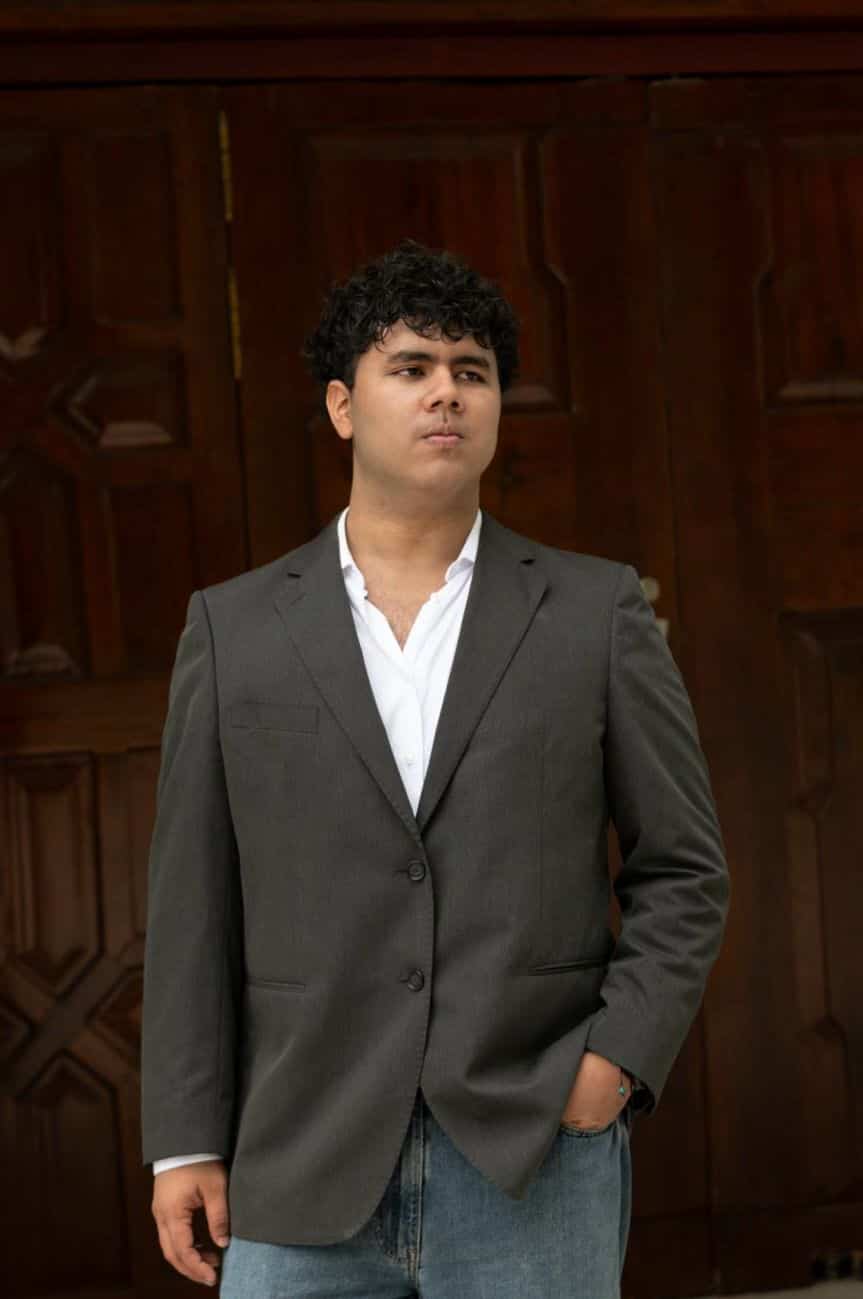
Juan David Amaya
Senior Advisor on Climate Change
Colombia
Juan David Amaya is a Colombian social entrepreneur, activist, and climate finance strategist. He is the Founder of Life of Pachamama, an initiative focused on environmental sustainability, climate action, and community-driven impact across Latin America. His work centers on advancing innovative solutions at the intersection of climate finance, social development, and environmental advocacy.
He has been recognized as part of Forbes 30 Under 30 and among the 100 Most Influential Latinos for his contributions to climate leadership and social impact initiatives. His work is closely aligned with SDG 13 on Climate Action.

Frandy Morales Rodríguez
Director of Strategic Partnerships and Venezuelan Affairs
Venezuela
Frandy Alexandra Morales Rodríguez is an advocate for freedom of expression, youth participation, and democratic engagement, with a strong interest in institutional development and social justice. Her work and perspectives focus on empowering younger generations to actively contribute to more inclusive, participatory, and democratic societies.
She believes that peace and social justice can only be sustained through strong institutions that protect fundamental rights and civic participation. Her vision is closely aligned with SDG 16 on Peace, Justice, and Strong Institutions.

Elias Enoc R. Panduru
Senior Advisor on Entrepreneurship
Honduras
Elías Enoc Panduru is a Honduran youth leader, social entrepreneur, and strategist focused on innovation, international cooperation, sustainability, and social impact. His work centers on strategic partnerships, youth development, and the advancement of initiatives that promote inclusive growth and regional collaboration across Central America.
He has served in leadership and coordination roles within institutions focused on business development, international cooperation, and civic engagement, and was recognized as part of Forbes 30 Under 30 Centroamérica for his contributions to innovation and social impact. His work is closely aligned with SDG 17 on Partnerships for the Goals and SDG 8 on Decent Work and Economic Growth.
Projects
Our work spans multiple sectors:

Youth Fellows for the SDGs
Young leaders across 15 countries documenting how public corruption undermines SDG progress and shapes young people's lives, producing the evidence institutions need to act, and bridging local realities with the tables where decisions are made.
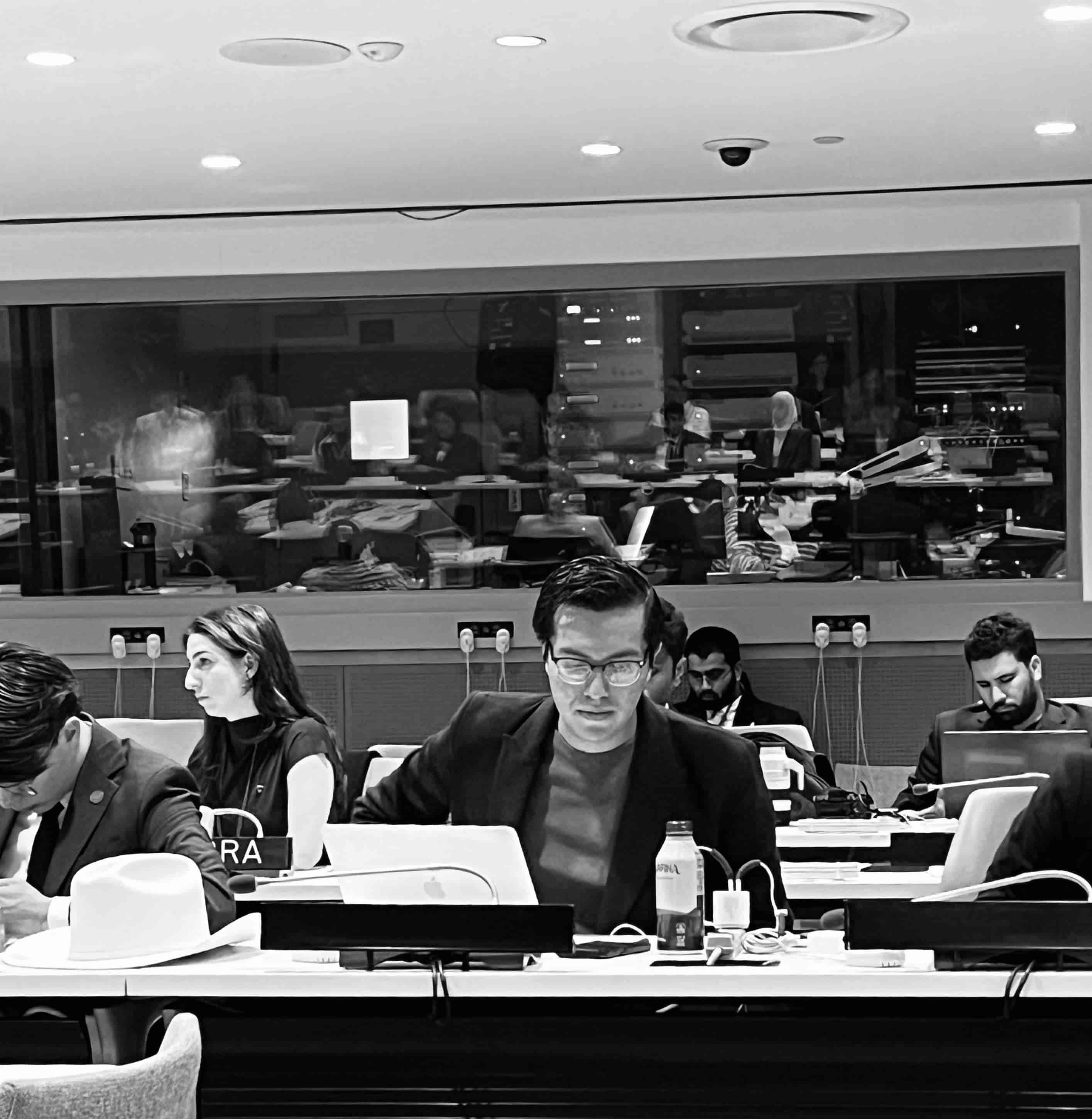
Youth Corruption Perception Index
The first youth-led public corruption perception index in Latin America, turning the lived experience of young people across 15 countries into policy-grade evidence.
The Youth Report on Corruption and Development
A regional policy paper analyzing how public corruption affects young people, weakens institutions, and slows sustainable development across Latin America, undermining progress towards the SDGs and the broader 2030 Agenda.
Youth Integrity Academy
Building the next generation of leaders equipped to demand and practice integrity in public life, beyond ethics, toward action.
The structural barrier behind every challenge
The evidence is consistent: countries with higher levels of public corruption consistently show slower development, weaker institutions, and fewer opportunities for their citizens, particularly for young people.
Governments, international organizations, and civil society are making significant investments to address the defining challenges of our time: climate change, inequality, lack of opportunity, and access to quality education and healthcare.
Yet across Latin America and beyond, public corruption remains one of the underlying barriers connecting many of these challenges. It diverts the resources allocated to solve them, weakens the institutions responsible for delivering them, and widens the gap between policy commitments and lived reality.
According to Transparency International, many developing countries have shown little to no progress in reducing public corruption over the past decade. At the same time, a growing wave of Gen Z and youth-led movements across the world is increasingly mobilizing against public corruption and weak governance, recognizing their direct impact on development and on young people's daily lives.
The message from younger generations is becoming clear: sustainable development cannot exist without stronger institutions and greater public integrity. It is time for leaders and institutions to respond with the seriousness and urgency this challenge requires.
Our generation recognizes this pattern. And we are committed to addressing it with the evidence, the seriousness, and the urgency it deserves.
From local communities to international forums.
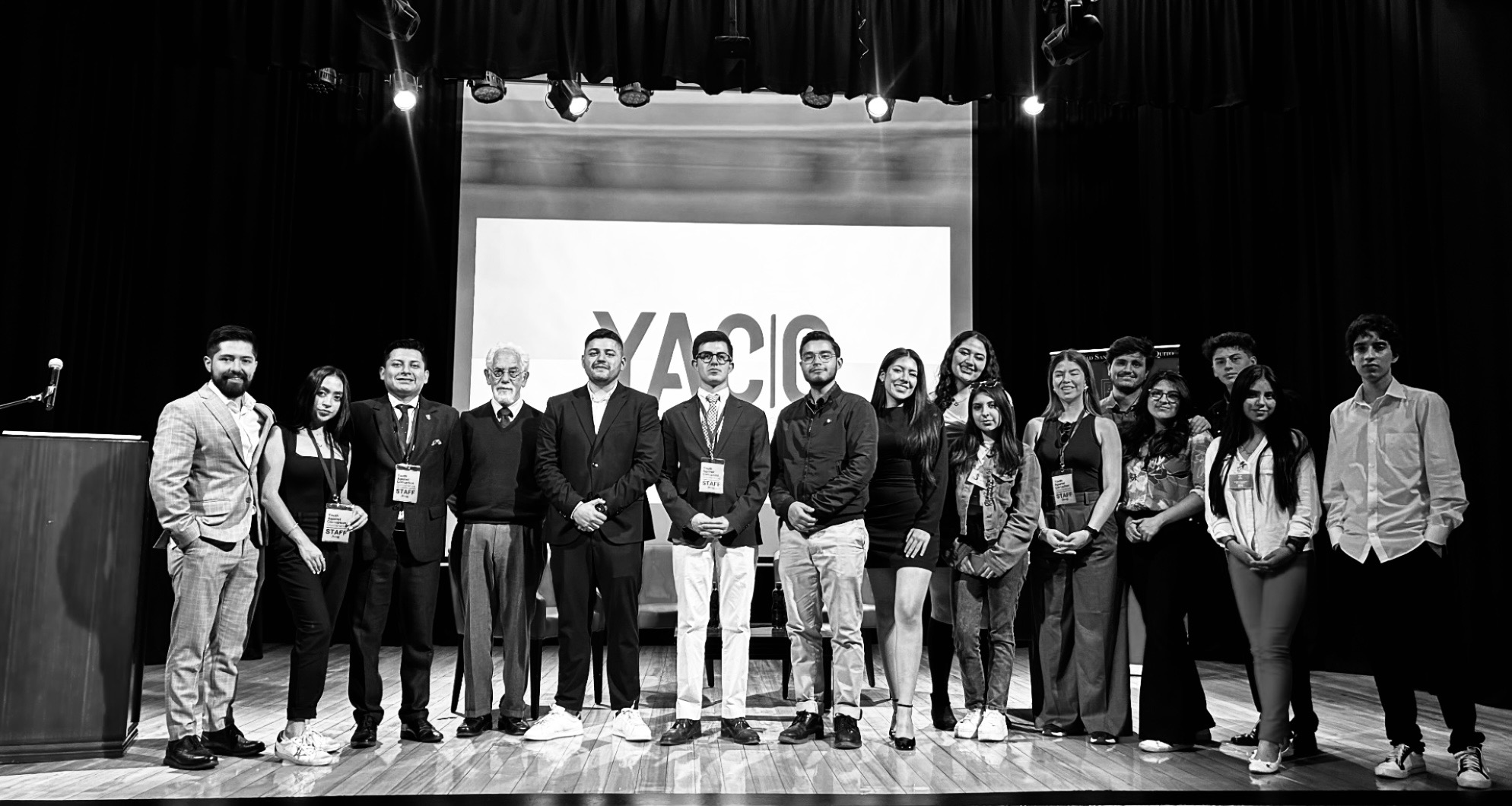
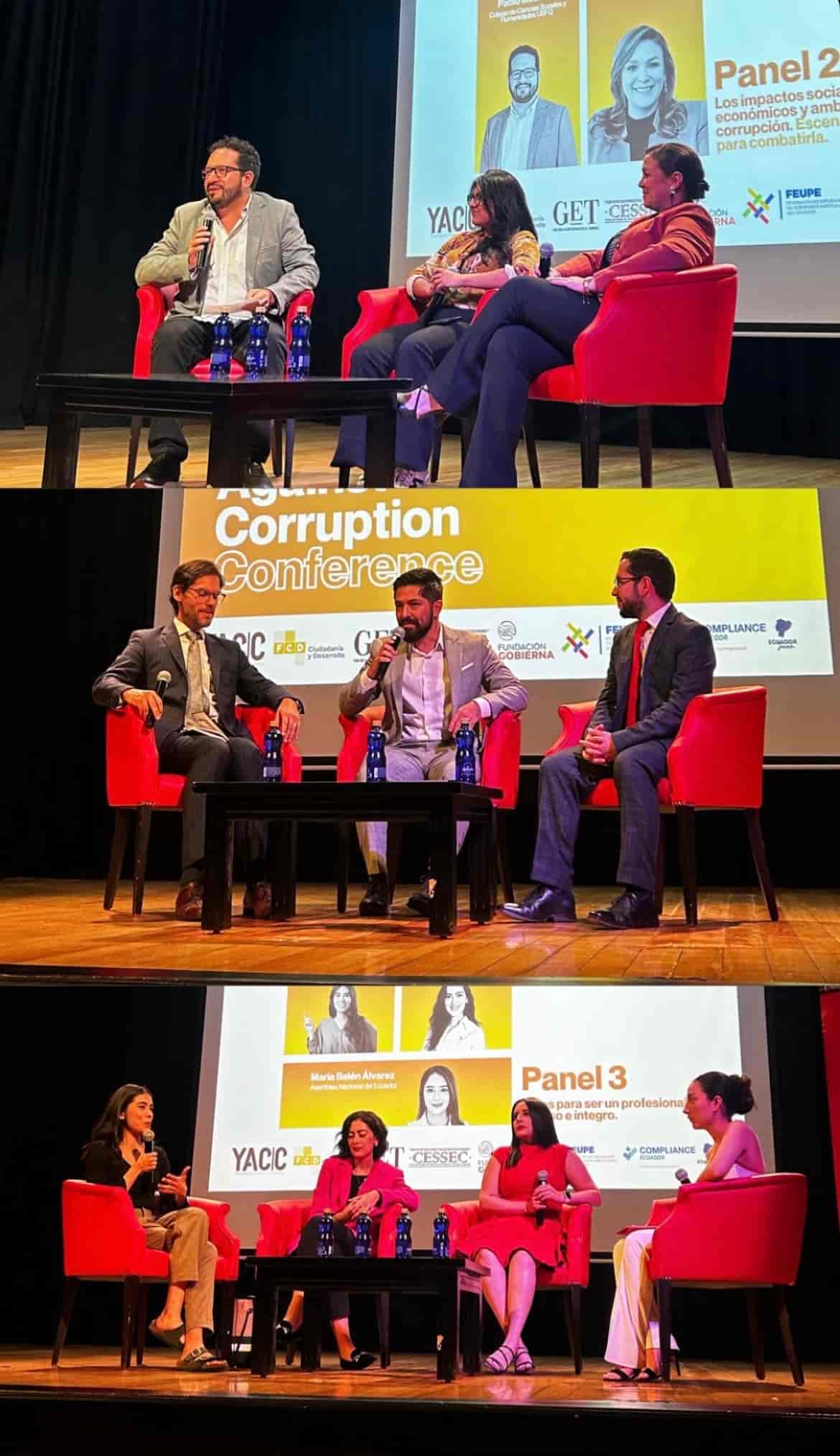
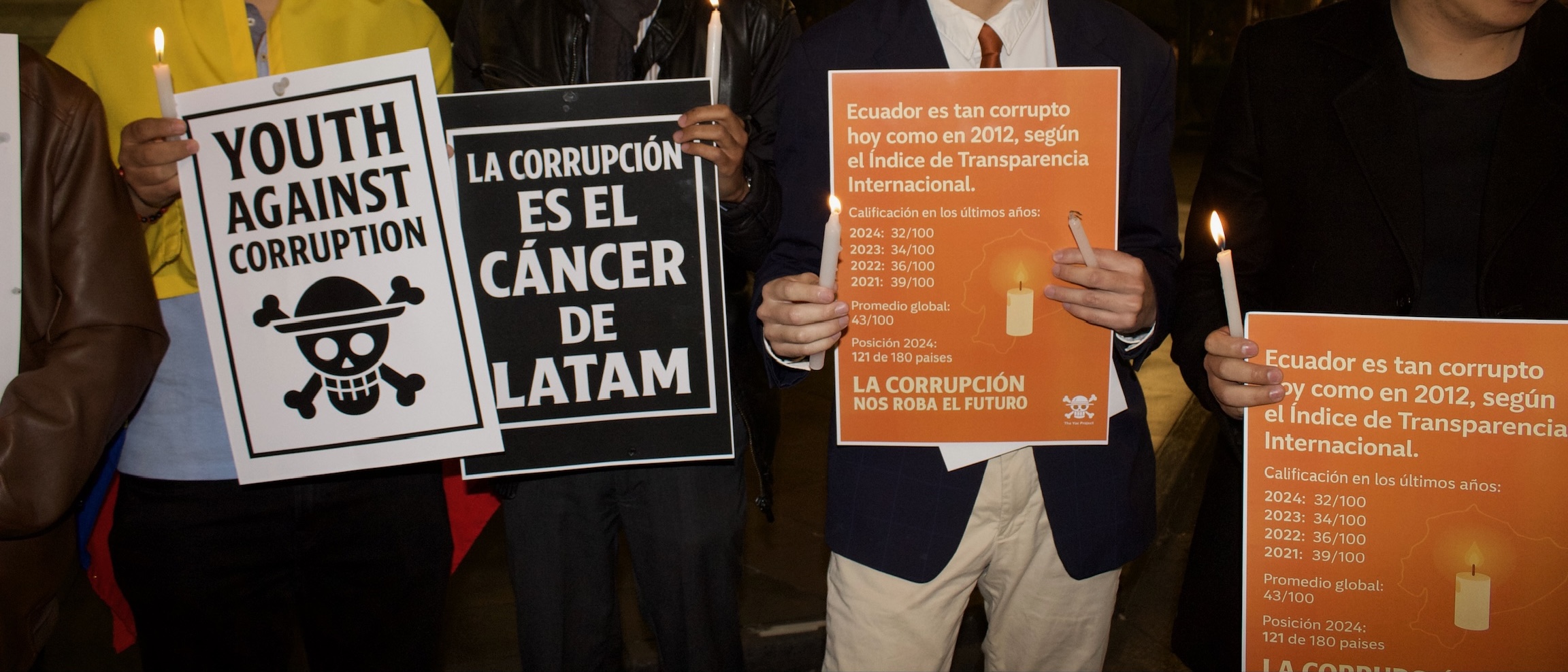
In 2024, YAC Foundation launched its inaugural Youth Integrity Academy in Ecuador, bringing together over 200 young leaders from across Latin America, marked World Anti-Corruption Day alongside Gen Z movements, and consolidated its first strategic alliances with organizations including Transparency International's Ecuador chapter. Our fellows shared firsthand accounts of how public corruption affects their countries, bringing local voices into a broader regional conversation.
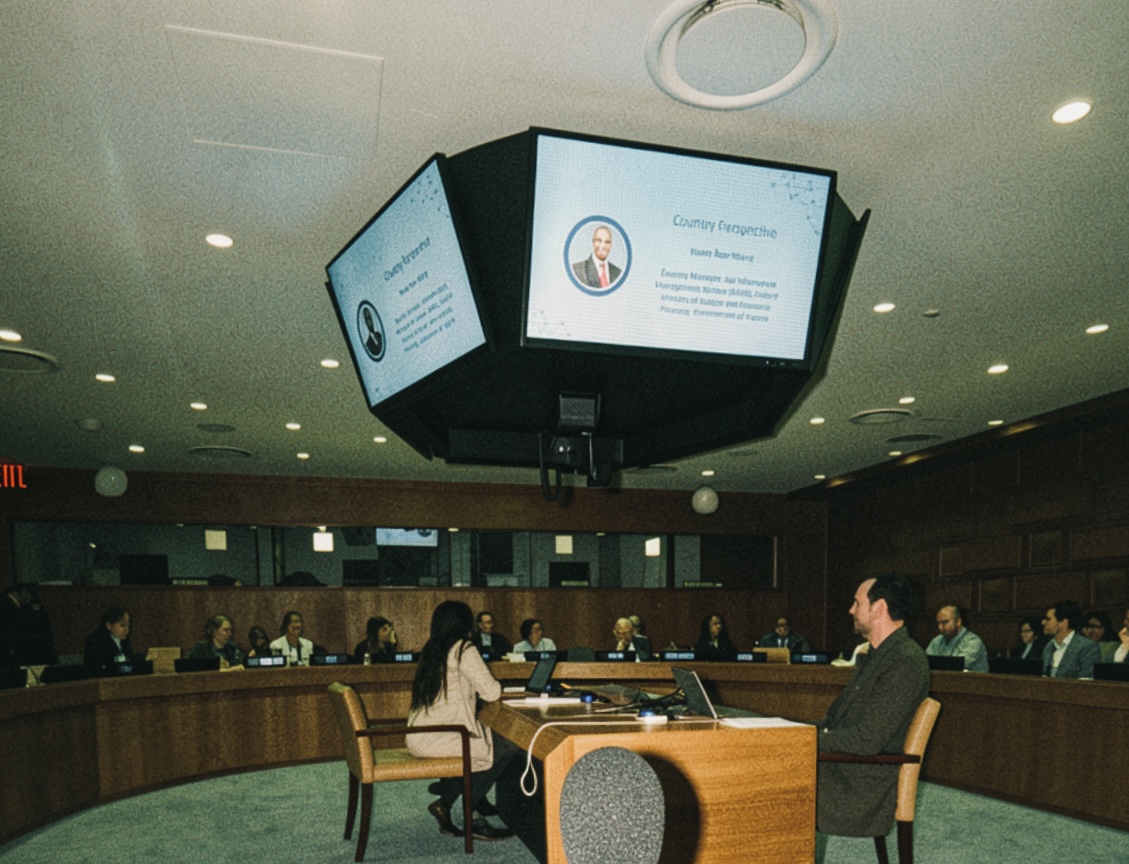
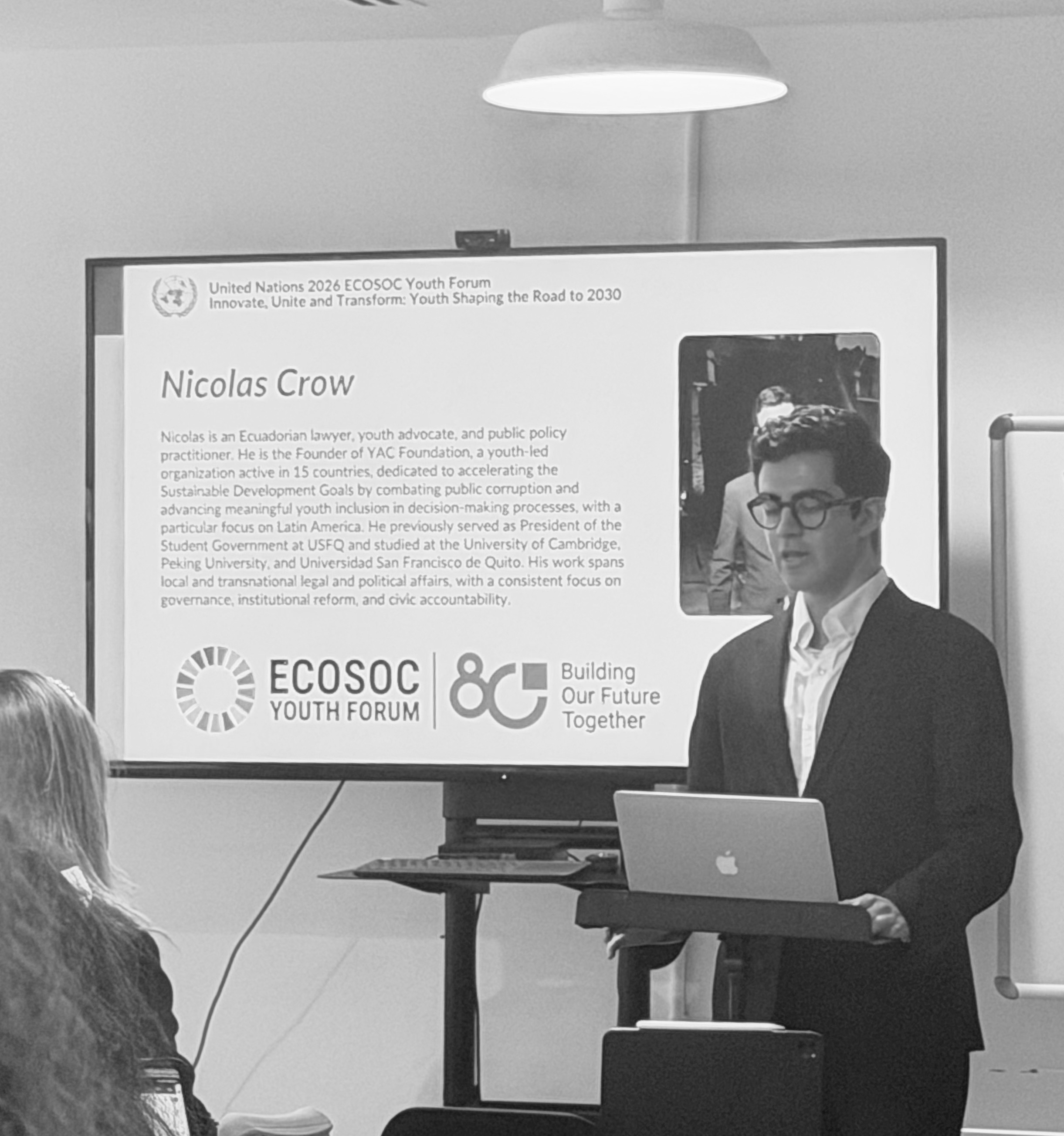
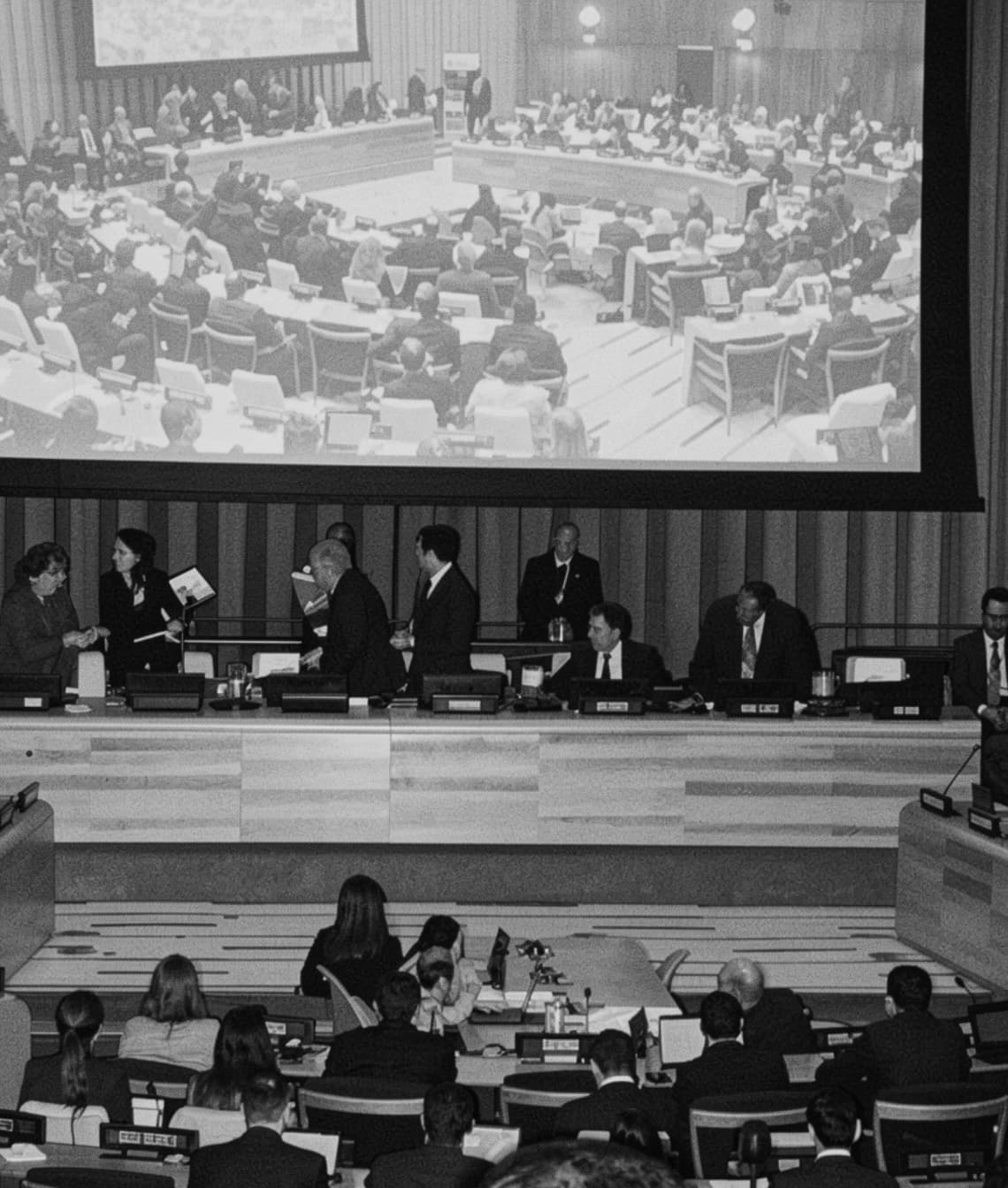
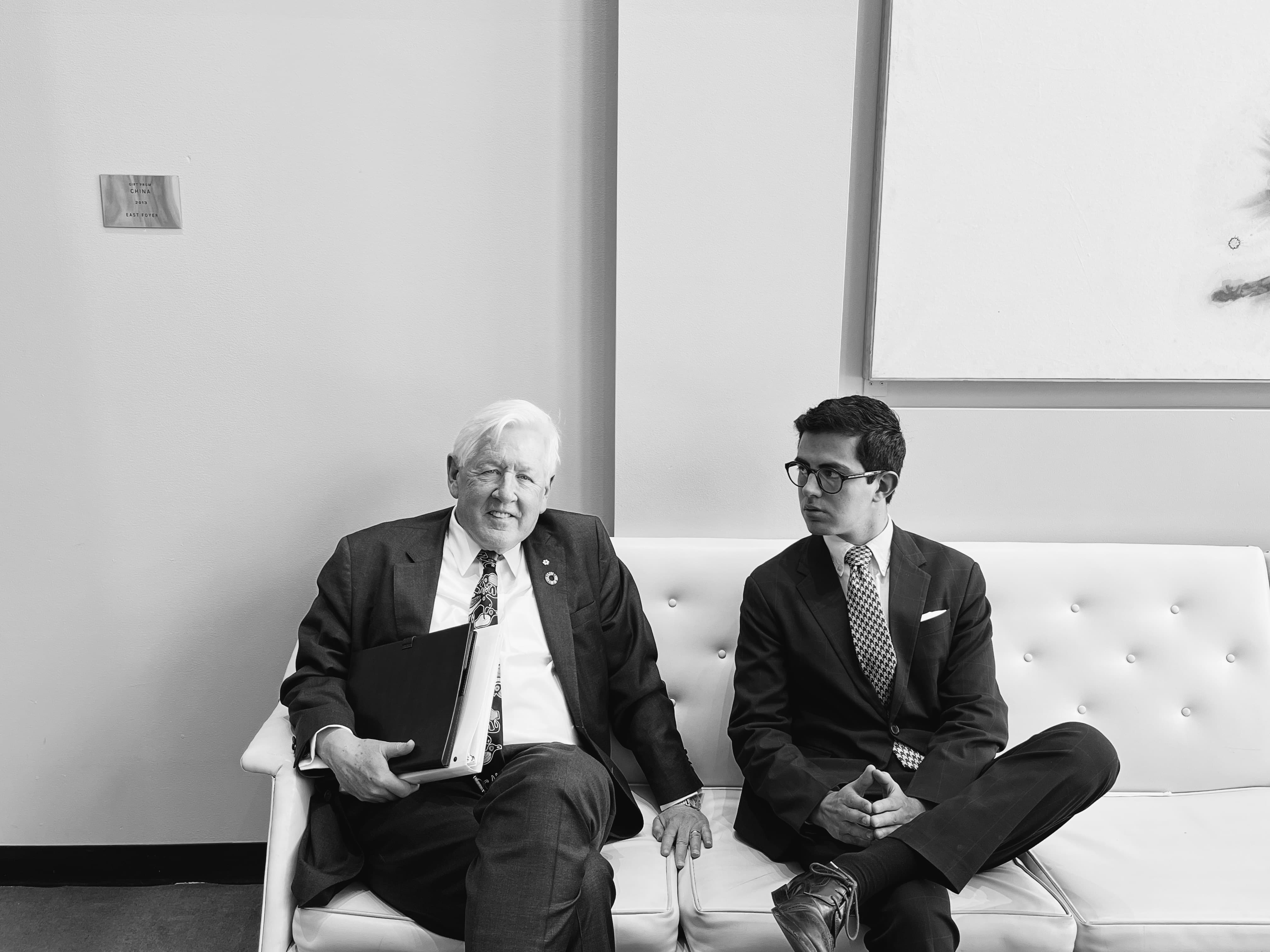
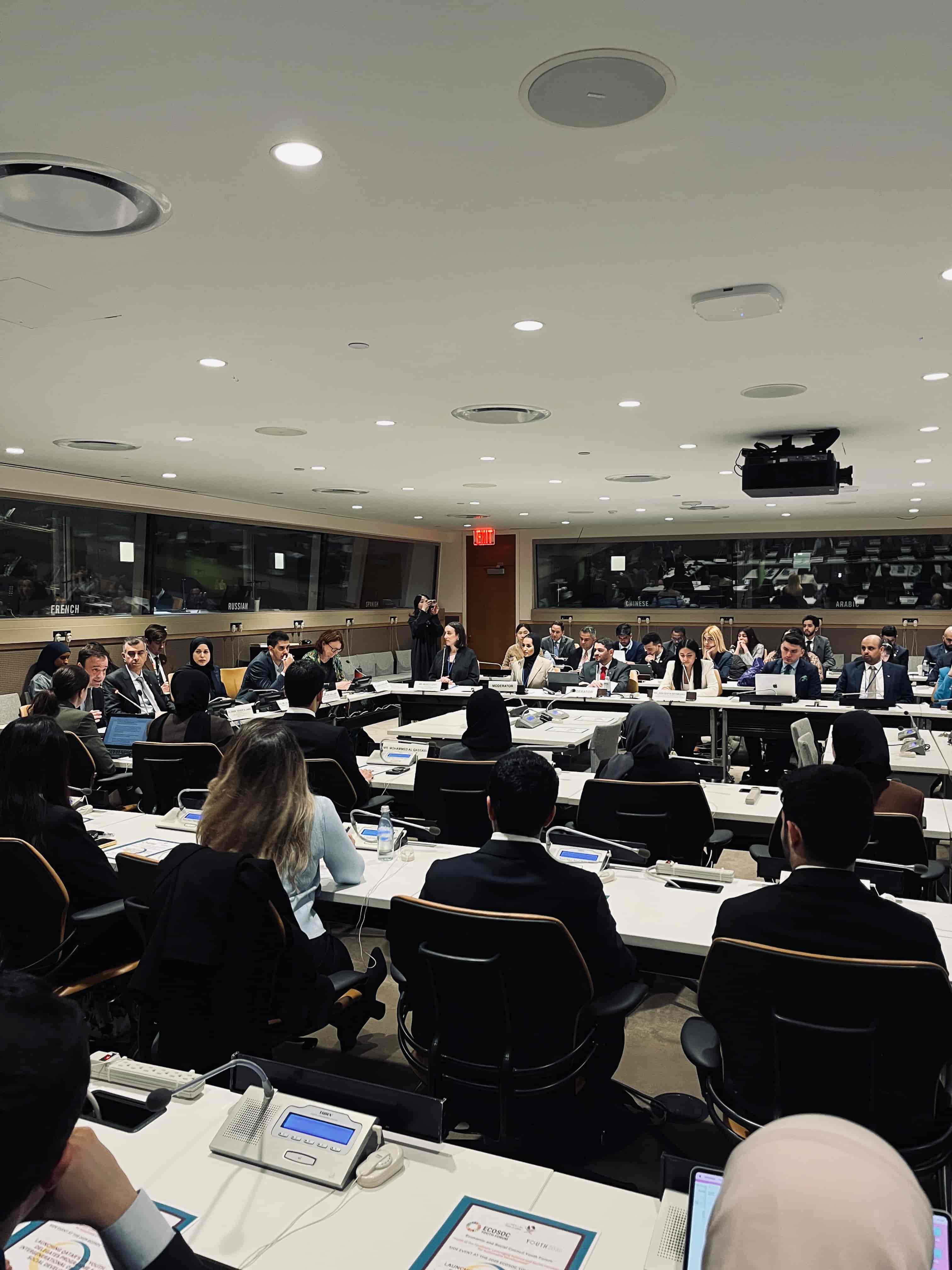
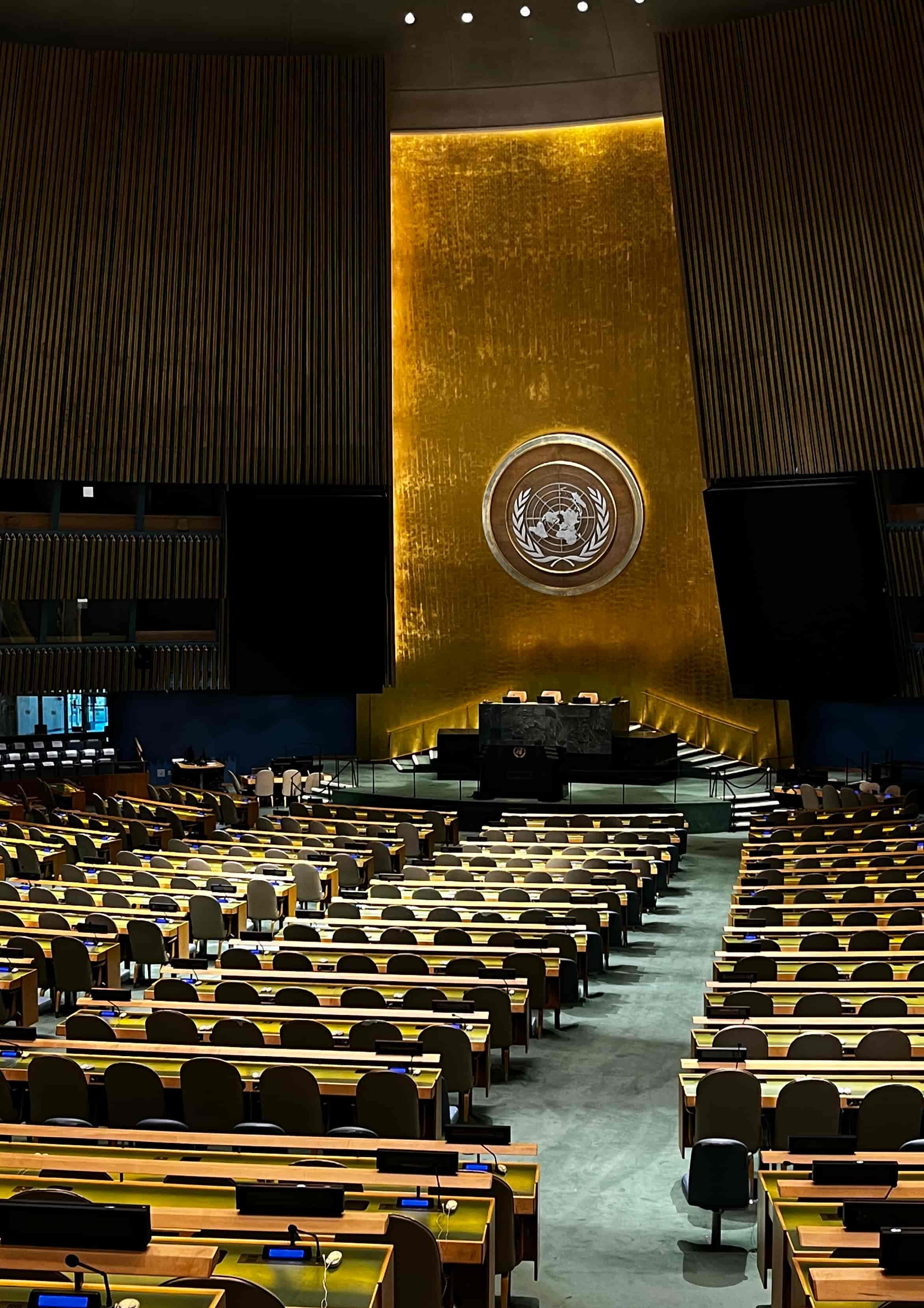
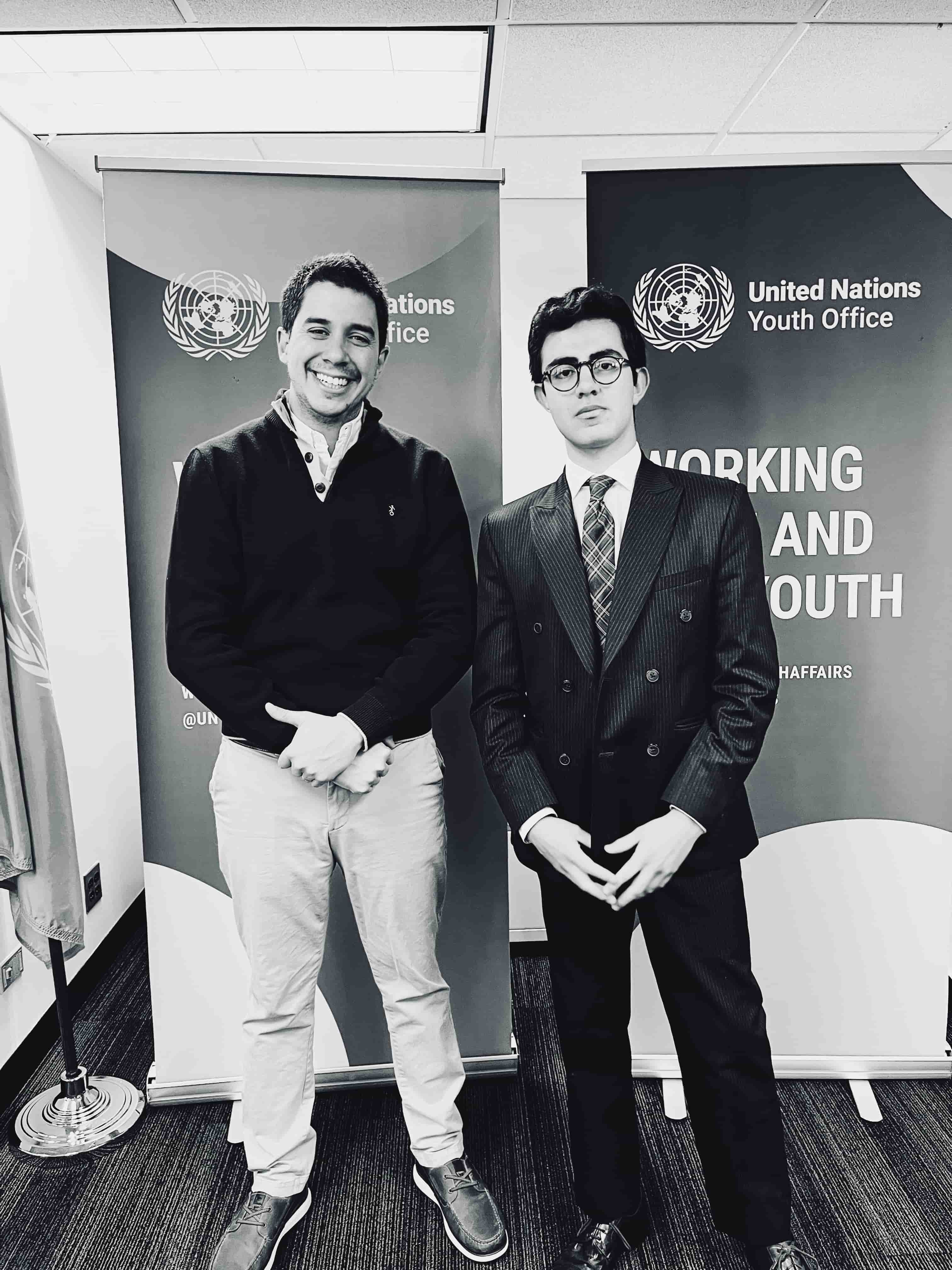
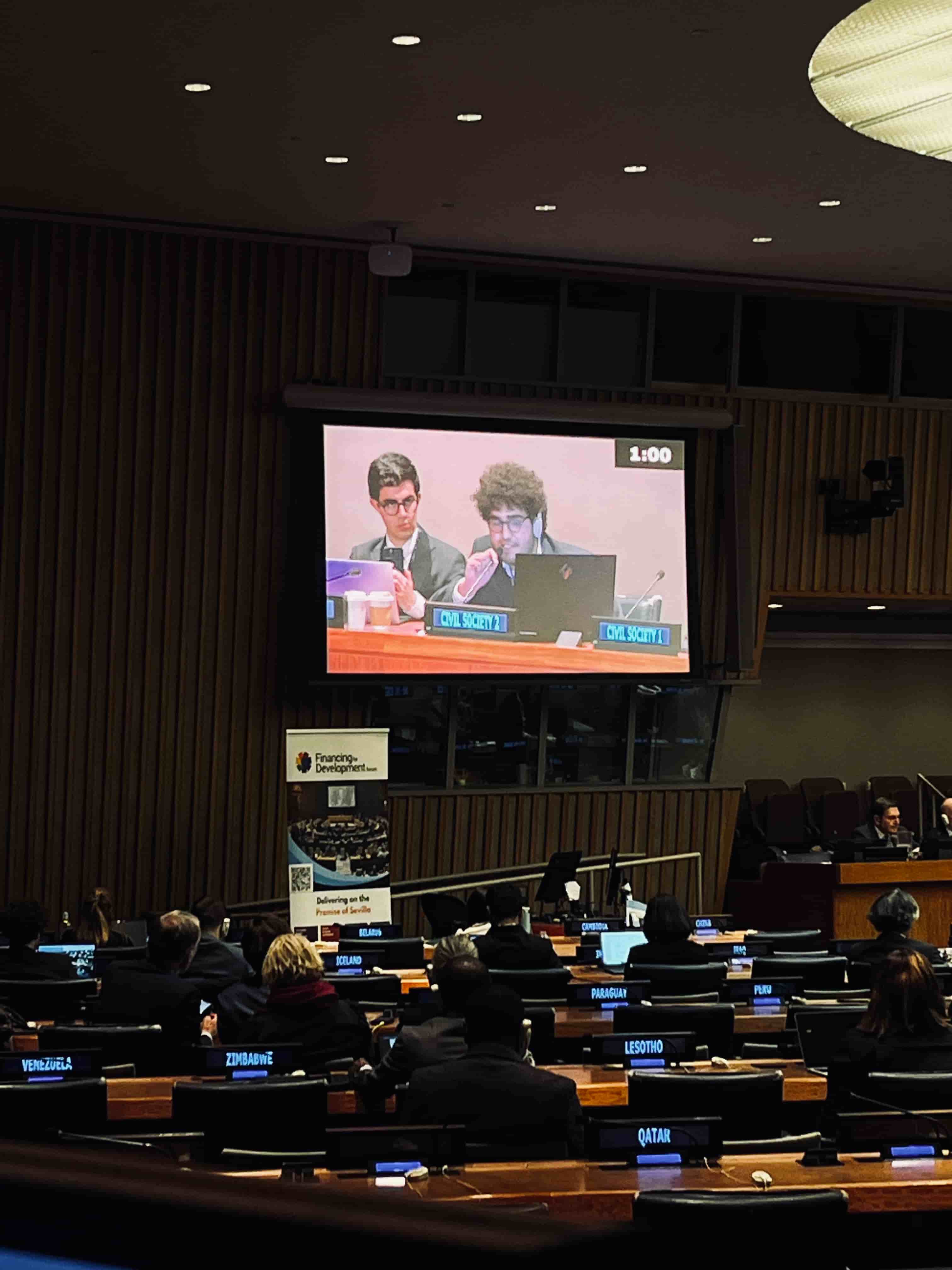
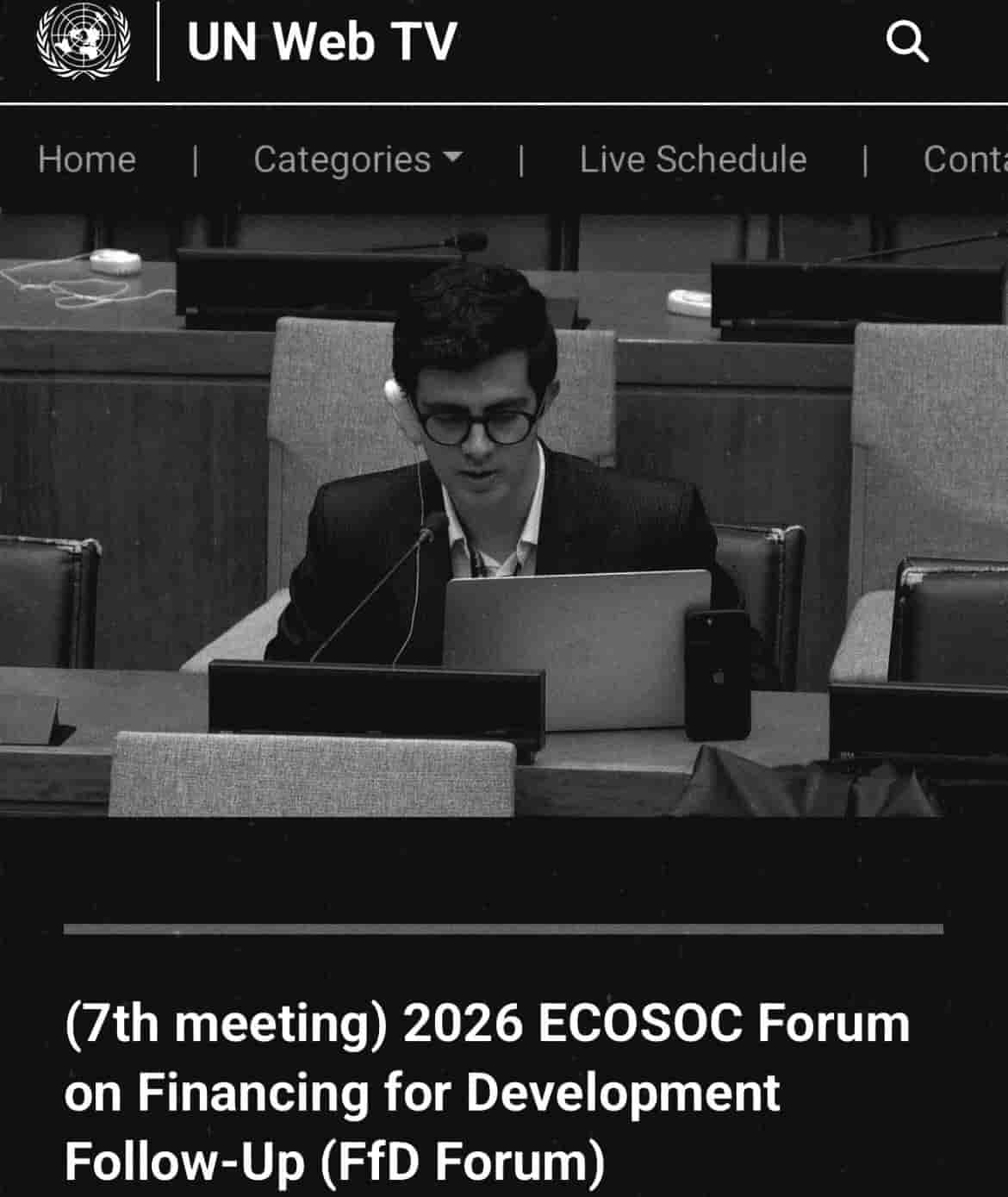
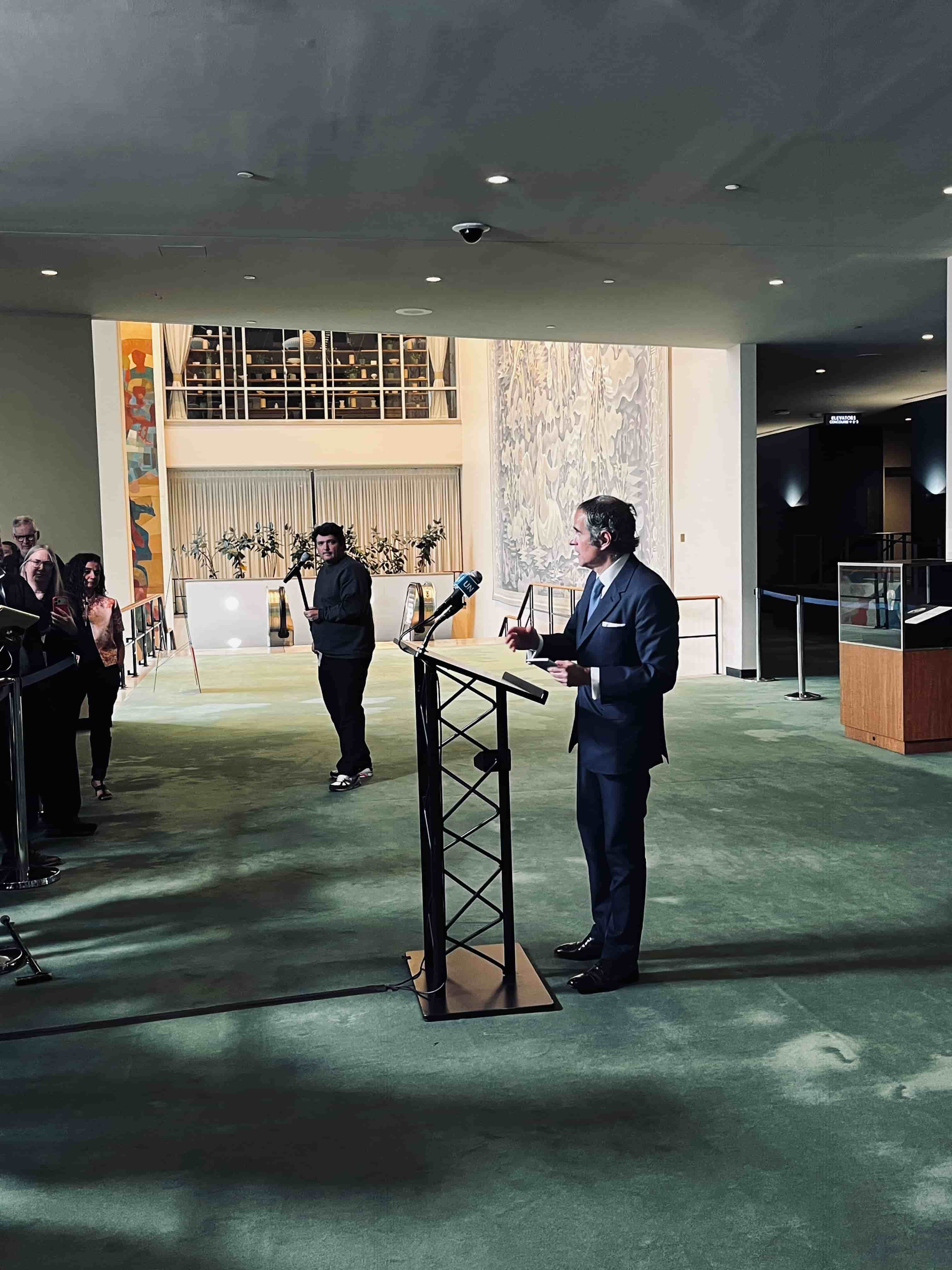
From there, we earned a seat at the world's most important tables. Our members received consecutive invitations to the ECOSOC Youth Forum at United Nations Headquarters in New York, participated in the Financing for Development Forum, the STI Forum, the SDG Investment Fair, and Revitalizing Development Effectiveness organized by IATI and UNDP. We met with the Assistant Secretary-General for Youth Affairs, collaborated on the Youth Declaration on Nuclear Non-Proliferation, were invited by local parliaments to dialogue on public corruption, and launched our Fellows Program, receiving over 500 applications and selecting 20 fellows across 15 countries. Our team is now working toward consultative status with ECOSOC, with a clear roadmap to strengthen YAC Foundation's voice at international forums.
And we are just getting started.
Accelerating the achievement of the Sustainable Development Goals (SDGs)
Climate Action
Public corruption diverts climate finance, weakens environmental enforcement, and undermines the implementation of solutions that already exist. Integrity is a precondition for effective climate action.
Quality Education
Education systems deliver stronger outcomes where public institutions operate with transparency and accountability. Public corruption in education directly affects the quality and accessibility of opportunity for young people.
Good Health
Healthcare outcomes are closely linked to the integrity of public systems. Public corruption in health procurement and administration affects the availability of medicines and services, disproportionately impacting those who need them most.
Decent Work
Fair economic opportunity requires fair institutions. Public corruption distorts competition and closes doors based on connection rather than merit, disproportionately affecting young people entering the workforce.
Strong Institutions
SDG 16 recognizes that accountable, transparent institutions are not just a goal, they are the foundation on which every other goal is built. Addressing public corruption is central to SDG 16 and to the entire 2030 Agenda.
Partnerships for the Goals
International cooperation reaches its full potential only when channeled through accountable institutions. Strengthening public integrity is essential to ensuring that global commitments translate into real outcomes.
Supported by

Public corruption is not inevitable. Join the generation committed to proving it.
Join the organization